
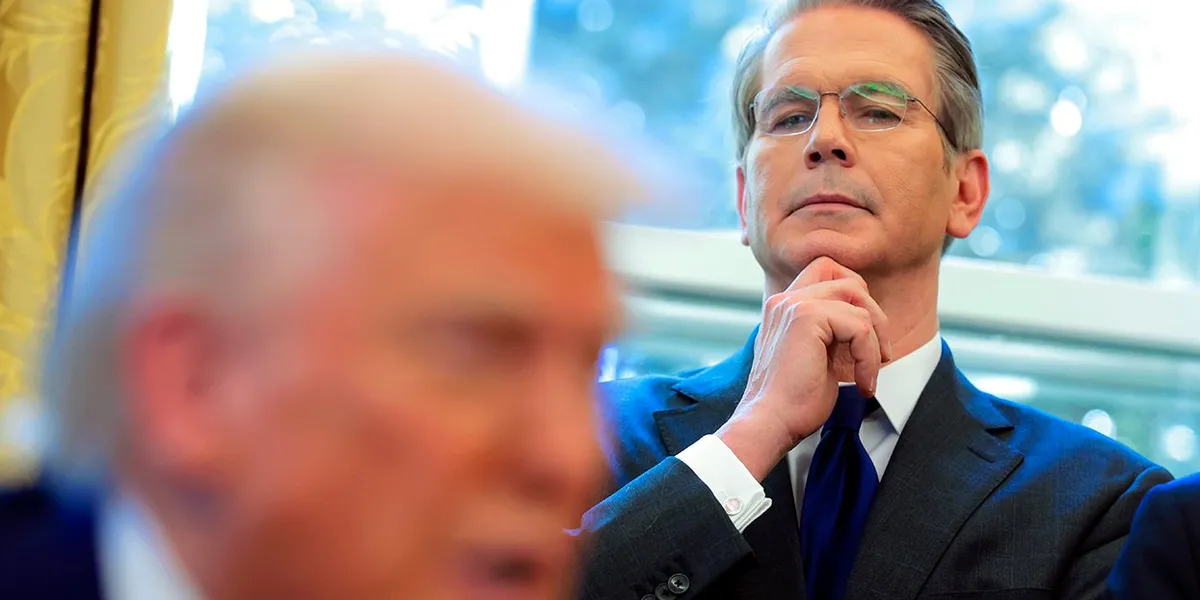
U.S. Treasury Secretary Scott Bessent has urged Congress to pass comprehensive crypto market structure legislation, increasing pressure on lawmakers to establish a federal regulatory framework for digital assets.
In recent remarks, Bessent emphasized that regulatory uncertainty continues to hinder the growth of the U.S. crypto sector, arguing that the absence of clear rules is driving companies and capital toward jurisdictions with more defined frameworks.
“The regulatory framework for digital asset markets is unclear,” Bessent said, noting that firms operating abroad benefit from predictable compliance standards, while U.S.-based companies face ongoing legal ambiguity.
The proposed Digital Asset Market Clarity Act, which passed the House of Representatives in 2025, seeks to establish federal rules governing digital asset markets, including registration requirements, oversight responsibilities, and compliance standards. The legislation is currently under consideration in the Senate.
Bill aims to define regulatory boundaries
A central objective of the bill is to clarify jurisdiction between key regulators, particularly the Securities and Exchange Commission (SEC) and the Commodity Futures Trading Commission (CFTC). The lack of clear boundaries has long been cited as a barrier to growth, with firms uncertain whether specific tokens fall under securities or commodities regulations.
Bessent framed the legislation as a necessary step to replace fragmented oversight with a unified regulatory structure. The framework would define how digital asset platforms register, what disclosures are required, and how custody and investor protections are implemented.
He also linked the proposal to broader legislative efforts, including stablecoin regulation, arguing that a comprehensive market structure framework is needed to support the development of digital financial infrastructure in the United States.
Industry participants have actively lobbied for clearer rules, emphasizing the need for legal certainty to enable institutional participation and long-term investment in the sector.
Global competition and policy urgency
Bessent’s remarks reflect growing concern among U.S. policymakers that the country risks losing its leadership position in digital asset innovation. He pointed to jurisdictions such as Singapore and Abu Dhabi, where regulatory clarity has attracted crypto firms and capital.
The warning comes as global financial centers move to implement structured digital asset regimes. The European Union, the United Kingdom, and several Asian jurisdictions have already introduced comprehensive frameworks, increasing competitive pressure on U.S. policymakers.
Despite bipartisan support for crypto legislation, progress in the Senate has been slowed by disagreements over specific provisions, including aspects of stablecoin regulation and the treatment of yield-bearing products.
Market participants view the legislation as critical for unlocking broader institutional adoption and integrating digital assets into regulated financial systems. Without clear rules, firms may continue to expand operations overseas, limiting domestic market development.
Bessent’s call for action underscores the urgency of establishing a cohesive regulatory framework, positioning crypto policy as both an economic and strategic priority for the United States.
