

For decades, shopping at Dollar Tree meant one simple thing: Everything cost exactly $1.
That predictable price point was the discount chain’s defining charm. Customers could fill up a cart with household essentials, seasonal decor, and snack foods without having to check price tags or keep a mental tally of their running total.
But that era is officially behind us.
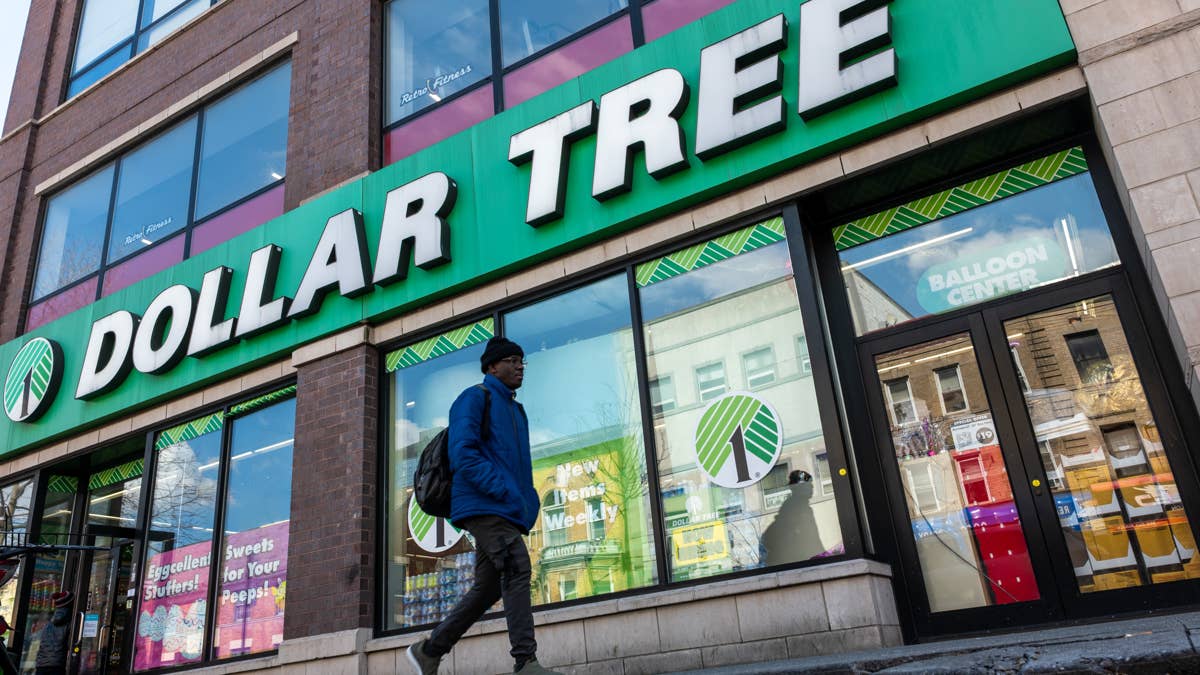
After breaking its historic single-dollar threshold in 2021 to raise base prices to $1.25, as NBC News noted, Dollar Tree has aggressively rolled out its multi-price strategy. Walk into a store today, and you’re likely to see products priced at $3, $5, or even up to $7.
While some shoppers may have held out hope that higher-priced merchandise was merely a temporary experiment to combat inflation, Dollar Tree’s latest financial results confirm otherwise: Multi-price merchandise is now permanent.
And for budget-conscious consumers trying to stretch every paycheck, the shift represents a major change in how the discount giant operates.
Strong earnings prove Dollar Tree’s higher prices are working
If you’re wondering why Dollar Tree isn’t turning back, the answer is simple. The numbers prove the strategy is paying off.
In its second-quarter 2026 earnings report, Dollar Tree Inc. posted total sales growth of 7.0%, with net sales reaching $4.9 billion. Comparable store net sales rose 3.7% year-over-year.
That sales growth wasn’t just driven by more foot traffic coming through the doors. Rather, it was powered by customers spending more on higher-priced items.
Related: Target recovers from Ulta divorce, goes all-in on beauty
The company reported a 3.3% increase in average ticket size, alongside a modest 0.4% bump in traffic.
Dollar Tree also converted or added roughly 710 stores to its multi-price format during the quarter alone, bringing its total count to approximately 6,600 multi-price locations across North America.
Those results validate that shoppers are embracing expanded assortments, even if they come with higher price tags.
During the company’s Q2 2026 earnings call, Dollar Tree leadership emphasized that multi-price offerings are a key driver behind growing basket sizes and overall store profitability.
“It’s the combination of a compelling opening price point, deep value, greater choice, trusted brands and new categories that makes the Dollar Tree value proposition so powerful,” CEO Michael Creedon noted.
Management clearly views multi-pricing not as a burden to shoppers, but as a crucial engine for growth, which explains why the strategy is here to stay.
Spencer Platt / Getty Images
What this means for Dollar Tree discount shoppers
For everyday consumers, Dollar Tree’s commitment to multi-pricing is a double-edged sword.
On the positive side, higher price caps mean better product selection. Shoppers can now pick up full-sized cleaning supplies, brand-name groceries, and higher-quality kitchen tools without making a separate trip to Target or Walmart.
More Retail:
- Costco sees major shift in member behavior
- Retail chain shuts all locations as legal changes hit industry
- Costco makes major investment in online shopping for members
For households looking to consolidate errands and save on gas, one-stop shopping offers real value.
But the move also strips away the effortless simplicity that made Dollar Tree famous. Budget shoppers must now pay close attention to price tags to avoid checkout surprises.
To ease that friction, Dollar Tree has been rolling out price scanners in stores across the country, USA Today reported. It’s a helpful feature, albeit one that serves as a constant reminder that the $1 era is long gone.
While the chain isn’t abandoning its core $1.25 entry-level items, bargain hunters should get used to seeing higher numbers across the aisles.
Higher prices at Dollar Tree are no longer a temporary fix. For better or worse, they’re now the new normal.
Related: Costco faces new challenge from surprising competitor
