

Say you’re browsing through Etsy (ETSY) for a birthday gift and find the perfect hand-painted mug. The photos look beautiful, and the description on them offers a personal touch, while you’re already picturing the smile when your cousin opens it.
However, with all the chaos from AI-generated imagery, it becomes incredibly tough to spot whether the item in the listing is really what will arrive at your door.
Those are no longer abstract questions for Etsy’s shoppers, and the problem was best explained by Reddit user u/ZealousidealTowel229 in the r/Etsy community, who complained that searching for fall decor brought up what appeared to be AI-generated products from shops with barely any sales.
“I will never buy something I can’t see what it is in reality,” the user wrote.
That said, CEO Kruti Patel Goyal believes the answer isn’t about retreating from artificial intelligence. In fact, it’s more about using the technology to help customers find genuine craftspeople and products that feel personal.
That unexpected message comes at a point when Etsy’s latest earnings show active buyers growing year over year for the first time in two years, with merchandise sales climbing 8.8%. The turnaround has caught Wall Street’s attention, too, with Etsy’s stock price surging nearly 28% this month.
To keep that momentum, Goyal will have to make good on a bigger promise: AI strengthening the very human connection Etsy shoppers value.
grinvalds / Getty Images
Etsy CEO says AI could make handmade shopping more personal
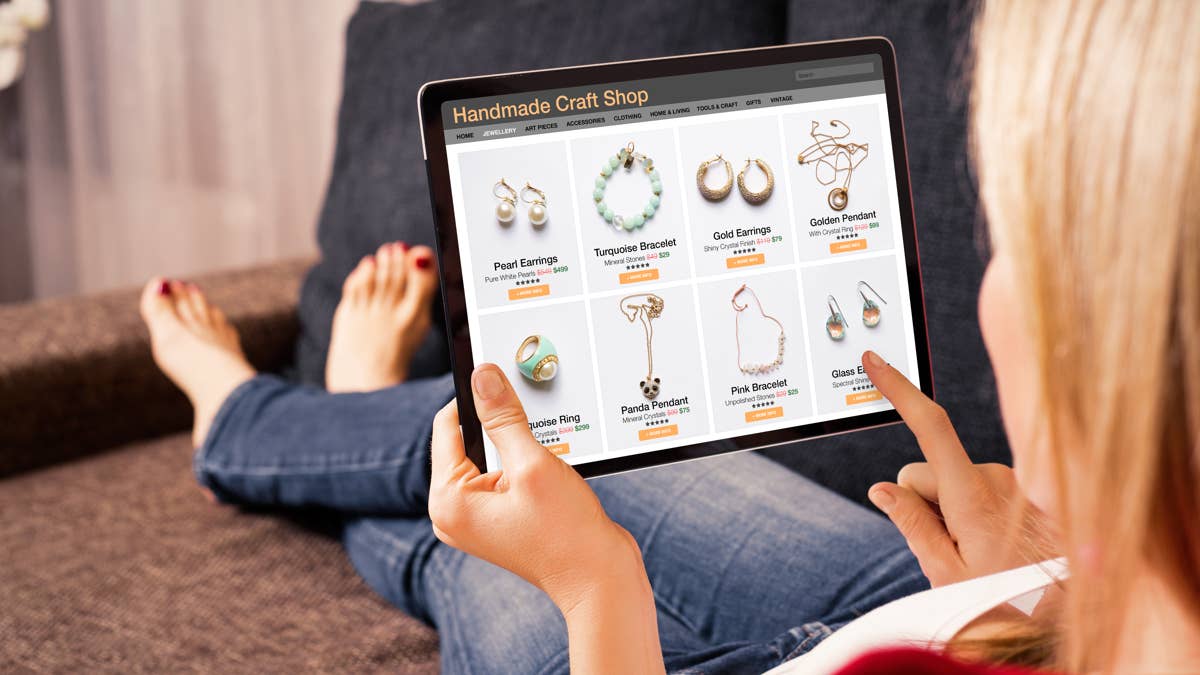
Etsy has about 100 million listings, which means finding the perfect handmade gift can sometimes feel like searching for a needle in a haystack.
More Retail:
- Kroger cuts discounts, promises pricing changes
- Walmart gets aggressive when it comes to holiday sales
- Costco copies a popular Trader Joe’s collectible
CEO Kruti Patel Goyal believes AI can change that without taking away what makes Etsy special.
In her October 28 shareholder letter, she explained:
“There’s an inherent paradox in how we think about AI at Etsy: we’re harnessing technology to make commerce more human.”
The idea is to use AI to help shoppers discover products that match their tastes while making the people behind those products more visible.
Etsy is already using machine learning to personalize recommendations and search results. Four out of five active buyers now have profiles powering personalized feeds and marketing.
Meanwhile, the company is testing ways to highlight sellers’ stories, craftsmanship, and creative processes, giving shoppers a better sense of who they’re buying from.
And the approach appears to be gaining traction.
Etsy estimates that personalization improvements contributed roughly two percentage points to its annualized year-over-year merchandise-sales growth rate by Q3.
More importantly, its active buyer base grew 1% to 87.5 million, marking the first year-over-year increase in two years. Marketplace merchandise sales also climbed 8.8%.
However, the caveat was that repeat buyers remained 0.8% below last year’s level, while habitual buyers declined 0.2%. Purchase frequency also remained slightly lower. That suggests Etsy is getting better at attracting shoppers and increasing spending per buyer, but hasn’t fully convinced them to return more often.
For Goyal, the next challenge is turning a more personalized shopping experience into lasting customer loyalty.
What Etsy’s shopper comeback means for its stock investors
Etsy’s customers aren’t the only ones returning.
Its stock price closed on October 27 at $87.66, up roughly 58% in 2026 and about 28% over the past month. That said, Etsy stock trades at 14.8 times forward non-GAAP earnings, 25% below its 5-year average.
After reporting strong earnings on October 28, shares initially shot up about 8.5% in premarket trading, and clearly, the enthusiasm has a foundation. Quarterly sales jumped 10.9% to $692.5 million, merchandise sales climbed 8.8%, and adjusted EBITDA margin reached 30.4%. More importantly, Etsy’s 87.5 million active buyers represented its first year-over-year customer growth in two years.
For independent sellers, a larger pool of shoppers means more chances to make a sale. For shareholders, the bigger prize is turning occasional gift buyers into dependable repeat customers.
That remains a challenge.
Etsy expects holiday-quarter merchandise sales to grow 5% to 7%, slower than Q3’s pace. Repeat and habitual buyers remain below year-ago levels, a reminder that bringing shoppers back once is different from making Etsy a regular destination.
There’s a financial wrinkle, too. Etsy bought back $394.6 million in shares during the quarter, roughly 167% of its $236.4 million in free cash flow.
Its Depop sale boosted available cash, but shareholders need to consider how sustainable that pace of repurchases is, especially with CFO Lanny Baker due to depart in March 2027, according to a company news release.
Moreover, Etsy’s headline $853.5 million net profit includes a large Depop sale gain; continuing operations earned $113.6 million.
Etsy’s recovery is real, but after a 58% stock rally, Wall Street will demand evidence that its use of AI to enhance trust, personalization, and customer loyalty can sustain growth beyond the holidays.
Related: Peter Thiel’s Apple verdict raises a $5 trillion question
