

Nike Inc. (NKE) stock has erased close to $200 billion in market value since its November 2021 peak, in what has become the worst drawdown in the company’s history.
That damage has since grown to more than $220 billion, according to Forbes, as shares slid toward a 12-year low, leaving the stock roughly 78% below its record high.
That collapse is now colliding with two very different headlines inside a single month. One comes from Wall Street. The other comes from a football program in Coral Gables, Fla.
On Sept. 21, Nike will drop out of the S&P 100, ending an 18-year run inside one of the market’s most selective stock indexes, according to an S&P Dow Jones Indices announcement.
The company stays in the broader S&P 500, but the exit makes official what shareholders have watched unfold for years.
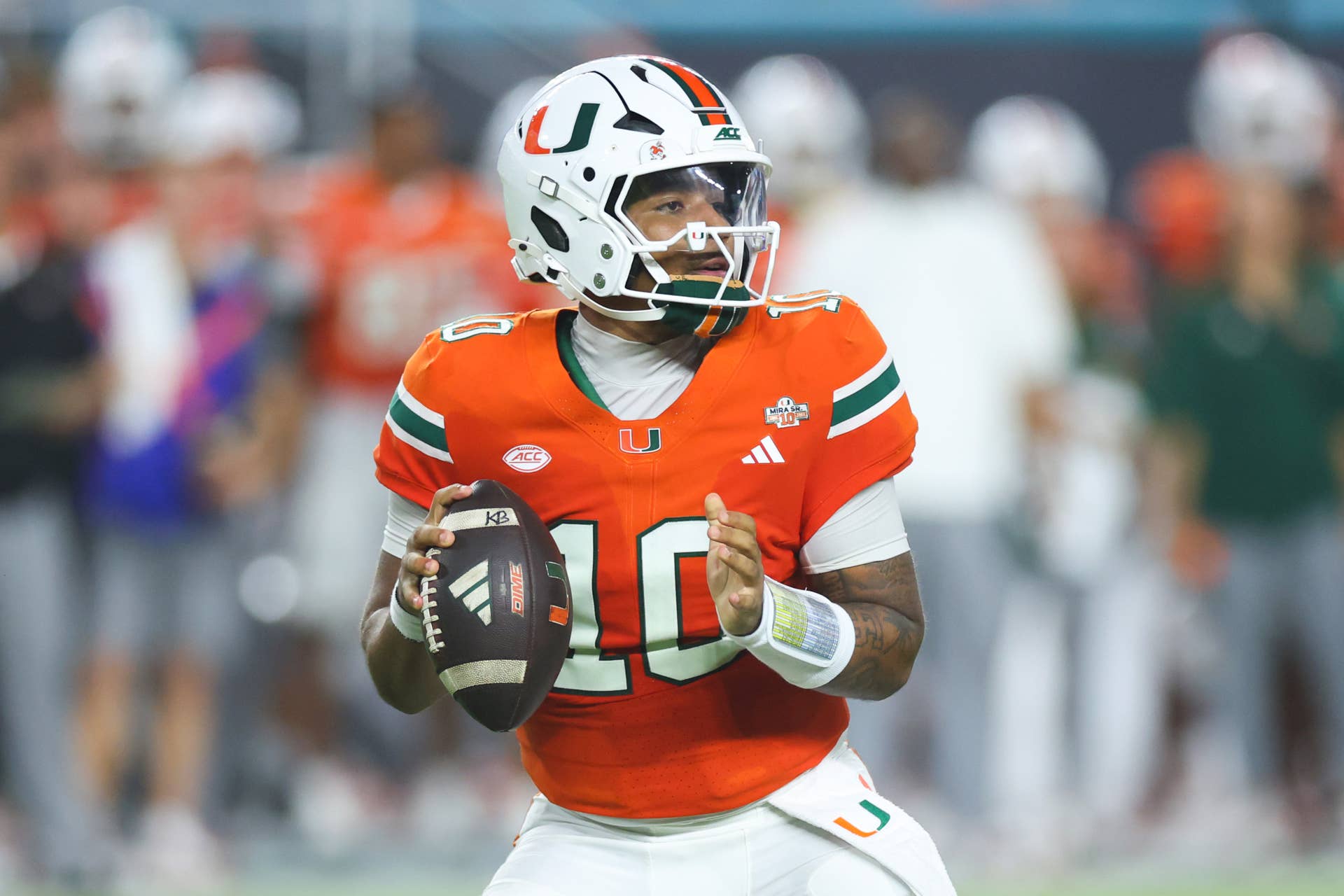
Yet in that same stretch, Nike beat Adidas to win a new 10-year, $200 million deal to remain the University of Miami’s official apparel partner, according to the Miami Herald.
Adidas had run Miami’s athletic programs since a 2015 agreement worth roughly $90 million, according to the Herald, and it was given until this week to match Nike’s new offer. It could not.
Nike just landed college sports’ priciest apparel deal
The new contract pays Miami roughly $20 million a year, mostly in cash, with the rest split between apparel and marketing support, the Herald noted. That figure barely registers against the $46.4 billion in revenue Nike reported for fiscal 2026, which explains why the stock barely moved on the news.
Nike and Miami’s relationship predates most rivalries in college sports. The two first partnered in 1987, when Nike became the first company to outfit every varsity team at a major university, according to the same reporting.
Adidas ended that run in 2015 with a 12-year offer that Nike chose not to match at the time, according to ESPN.
This time, the leverage ran the other way. Nike controls about 27% of the global athletic footwear and apparel market, compared with Adidas’ 13%, according to Seeking Alpha, a gap wide enough to let Nike keep outspending rivals for exactly this kind of high-visibility, long-term deal.
That leverage shows up elsewhere in Nike’s college football roster.
Ohio State, Texas, Clemson, Michigan, Alabama, and LSU are among the other marquee programs already under Nike apparel deals, according to Seeking Alpha, and the new Miami contract simply extends that list.
The agreement runs through the mid-2030s, locking up one more flagship program before any rival gets a second chance to bid.
Megan Briggs / Getty Images
Wall Street tells a very different story about Nike
The Miami deal says one thing about Nike’s standing. The stock says another.
Shares closed at $38.40 on Sept. 4, near a 12-year low, Forbes noted, a level last seen when the company was worth a fraction of its current size.
Nike’s market value first slipped below $100 billion back in March 2025, according to Bloomberg, and it has kept falling since.
Related: Nike just got kicked out of an elite club
The pressure traces back to Nike Direct, the online and retail arm the company spent a decade building as its growth engine. By cutting out traditional wholesale partners to prioritize its own apps and stores, Nike created a direct-to-consumer bottleneck that alienated shoppers and allowed nimble competitors to steal premium shelf space.
That pressure extends to Greater China, where local rivals Anta and Li Ning have taken share for eight straight quarters, Retail Dive reported.
Nike is now cutting off more than 1,000 third-party sellers there starting in January 2027 to regain control of its own sales channels, according to CNBC.
Analysts remain deeply divided on Nike
JPMorgan analyst Matthew Boss downgraded Nike to Underweight in August, cutting his price target to $40 from $47 and warning that turnaround costs will pressure profit well into fiscal 2028. Most of Wall Street disagrees.
Twelve analysts still rate the stock a Buy against just two Sells, a split that shows how far apart bulls and bears remain on the timeline for recovery.
New Chief Financial Officer David Denton, who joined Nike in August after running finance at Lowe’s and Pfizer, is now steering that recovery.
Fortune’s coverage of CEO Elliott Hill’s tenure has described a company trying to rebuild wholesale relationships and shelf space it walked away from years earlier, a process that takes longer than any single quarter can show.
More Nike:
- Nike just got kicked out of an elite club
- Nike is selling $80 casual sneakers for only $50
- Down almost 80%, is Nike stock undervalued or a value trap?
Nike’s brand and its stock are telling 2 different stories
That split is the real story here. Nike’s equity is being re-rated in real time, as an index exit and a fresh analyst downgrade make clear. Its commercial standing, measured by apparel contracts, campus visibility, and Saturday afternoon television exposure, has barely moved.
Investors chasing Nike purely on the strength of its brand should notice that gap rather than assume it closes automatically.
A company can keep winning marquee sponsorship fights while its shareholders keep losing money, and Nike is currently proving that both can happen at once.
The next real test is not another college program. It is whether Nike’s own financial results begin closing the distance between what the brand is still worth to the partners who pay for it and what the market currently thinks it is worth to the people who own it.
Related: Nike is selling $80 casual sneakers for only $50
